
(561) 513-5296Contact Us
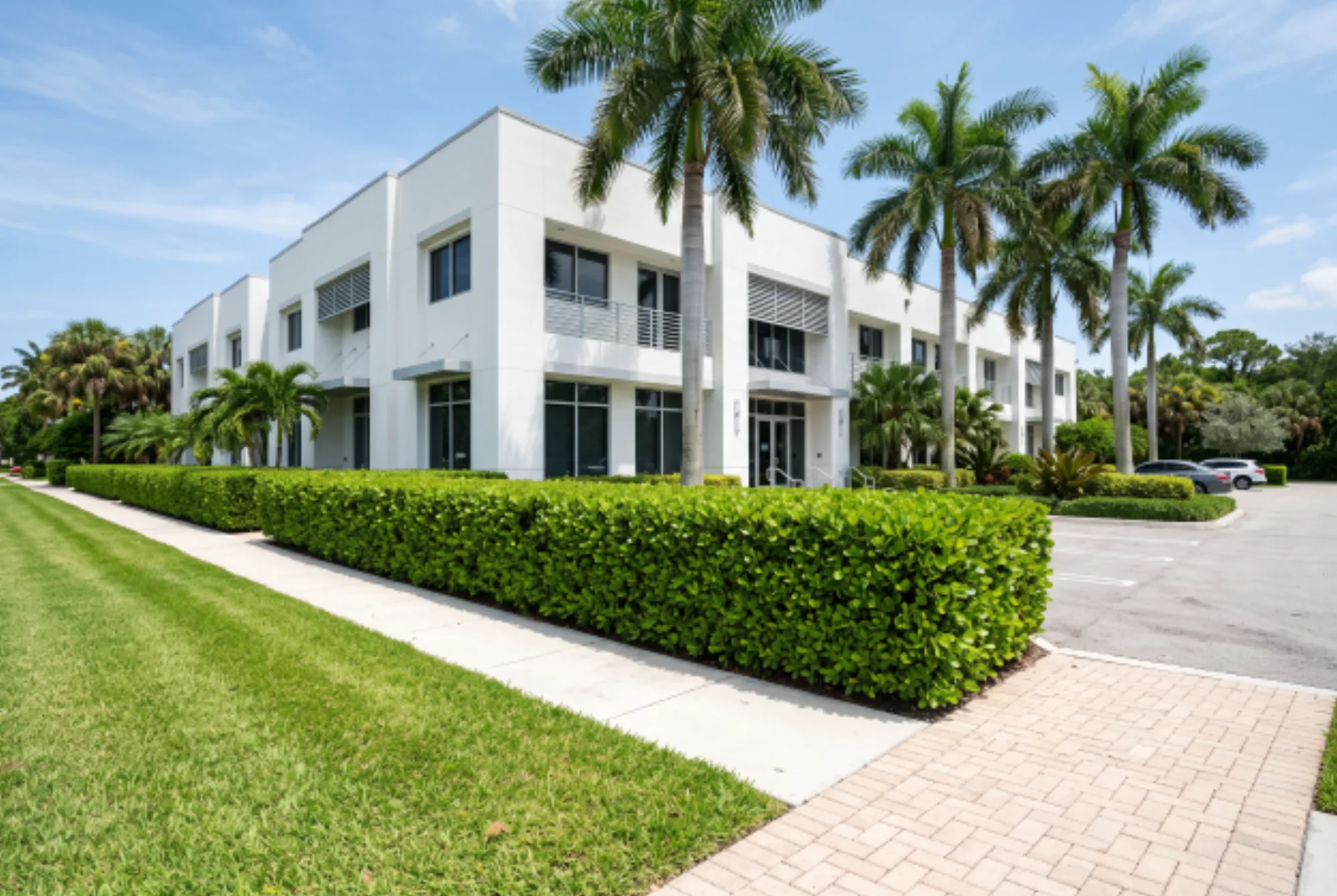
Every commercial property seems to have one. It's the hedge along the front of the building that looked like a solid wall when it went in and now looks like a row of sticks wearing a green hat. You can see the parking lot through the bottom third. There's a gap by the entry where a few plants died a couple of summers ago, and nobody filled it. Tenants walk past it every day, and so do prospective ones.
The usual response is to trim it again. That rarely fixes anything. A hedge that has gone thin and woody at the base won't fill back in from a tighter shear, and every trim that keeps the top crisp shades the bottom a little more. At some point the question becomes whether to rebuild it or start over. On commercial sites, that call is one of the more common landscape enhancements in West Palm Beach, FL, and it's worth making on purpose instead of by default.
Mostly, it's light. A hedge sheared flat on top and wider at the top than at the base shades its own lower branches. The lower growth slows, drops leaves, then quits. Give that a few years and you get the classic leggy hedge, dense on top and bare wood underneath.
Height creep makes it worse. Each trim leaves a little more than the last, and a screen meant to sit at chest height slowly climbs out of easy reach. The top gets harder to keep even, and the base gets even less sun.
Add pest pressure and uneven water along a long run of plants, plus the occasional car bumper. Once a gap opens, it usually stays open, because the neighboring plants don't spread to fill it. None of this means a crew botched a visit. It's what happens when a hedge gets shaped for this week's appearance instead of its long-term structure.
Often it can. Many hedge plants common on South Florida properties will push new growth from older wood after a hard cut-back, as long as they're otherwise healthy and well rooted.
Renovation means cutting the hedge back well below its current height and narrower than its current width, so new growth starts low and fills in from the base. On a long run where screening matters, it can be done in sections so the property isn't suddenly wide open. As it regrows, it gets shaped with the base slightly wider than the top so light keeps reaching the lower branches.
The tradeoff is short-term appearance. For a while after a hard cut, the hedge looks worse than it did before. On a retail frontage or a condo entrance, people will notice. Boards and property managers do better when they tell residents or tenants before the work starts, not after the first complaint.
Rejuvenation is usually the right call when the plants are alive and rooted, the gaps are limited, and the species fits the spot.
Sometimes the hedge is simply the wrong plant for the location. It may want to grow far larger than the space allows, so it'll fight the trimmer forever. It may be struggling with salt exposure or with shade from trees that grew up around it. Renovating that plant just resets the clock on the same problem.
Replacement also makes sense when more of the hedge is dead than alive, or when the gaps came from a pest or disease likely to hit new plants of the same kind. And if the property is already getting a new entry or a refreshed frontage, replacing the hedge as part of that project is cleaner than patching it.
A new hedge lets you choose a plant sized for the space at maturity. It also needs good soil prep and consistent water to establish. If irrigation coverage along the hedge line is spotty, have whoever services your system sort that out before planting, because a new hedge with dry spots will develop gaps of its own.
Walk the full length of the hedge, not just the stretch by the front door. Look at the base. Are there green buds or small shoots on the bare stems, or is the wood dry and brittle? Note where the gaps are.
Look up, too. If a tree canopy has grown over part of the hedge, that section may never thicken until the tree is addressed, which is a job for commercial tree services rather than the hedge crew.
Check sight lines at driveways, sidewalks, and parking lot exits. Many cities regulate hedge height near intersections and access points, so check your city or county rules before settling on a target height.
If pests are part of the story, that piece goes to our sister company, East Coast Sprayers, which handles fertilization and pest control under the same ownership for proper licensing, regulatory compliance, and specialization.
Put the shape and target height into the maintenance scope. A hedge with an agreed height and a base kept wider than the top tends to stay full for years. One trimmed to whatever looks tidy that day drifts right back to where you started. Folding that standard into full-service commercial landscape maintenance means the structure gets protected on every visit instead of rebuilt every few years.
How do I know if a commercial hedge can be saved? If the plants are alive, rooted, and producing some new growth on older wood, a hard renovation cut is usually worth trying. Widespread dead wood or the wrong plant for the location points toward replacement.
Will the hedge look bad after a renovation cut? Yes, for a while. Staging the work in sections and giving residents or tenants a heads-up makes that period easier to manage.
If the hedge out front has been trimmed for years without getting any better, call Perfect Cut Landscaping at (561) 513-5296 or reach us through our contact form to talk about landscape enhancements in West Palm Beach, FL, and whether your hedge should be rebuilt or replaced.
Tell us about your property and we will arrange a site walk and a clear proposal. No pressure, no vague numbers.
Begin Your Property Review